Julian Dunkerton: The Man Who Built Superdry and Fought to Save It
From selling clothes at a small market stall to running a global fashion business, Julian Dunkerton's career has been full of bold decisions, tough setbacks and unexpected comebacks.

Introduction
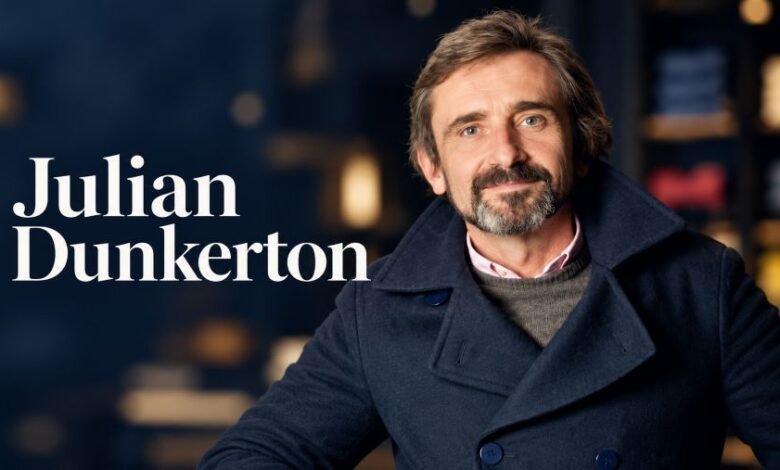
Julian Dunkerton is a British businessman and the co-founder of Superdry, one of the UK’s best-known casual clothing brands. He started his retail career with very little money. Years later, he was running a fashion company worth hundreds of millions of pounds.
His story is far from simple.
He built a successful business, left the company he helped create, and then fought his way back into its leadership. Today, he continues to work on Superdry’s future while also maintaining interests in cider production and hospitality.
Quick Facts About Julian Dunkerton
| Detail | Information |
|---|---|
| Full Name | Julian Marc Dunkerton |
| Date of Birth | 1 March 1965 |
| Age | 61 years old (2026) |
| Birthplace | London, England |
| Nationality | British |
| Profession | Businessman and entrepreneur |
| Famous For | Co-founding Superdry |
| Current Role | Chief Executive Officer of Superdry |
| Education | Ibstock Place, Orleans Park and Minster School |
| First Retail Venture | Cult Clothing |
| Superdry Founded | 2003 |
| Business Partner | James Holder |
| Wife | Jade Holland Cooper |
| Marriage Year | 2018 |
| Previous Wife | Charlotte Abbott |
| Children | Four, according to published biographies |
| Other Businesses | Dunkertons Organic Cider and hospitality investments |
| Net Worth | No verified current personal figure available |
Growing Up Between London and Herefordshire
Julian was born in London on 1 March 1965. His early years were shaped by family changes, different schools and a major move away from the capital.
His father, Ivor Dunkerton, worked in broadcasting. His family later became involved in organic cider production.
At 14, Julian moved to Herefordshire.
Life changed quite quickly.
He had grown up around London. Now he was living in a rural area with fewer opportunities. The move was difficult, especially during his teenage years.
In later interviews, he described how those experiences made him more determined.
His interest in business developed early. Clothes caught his attention, and he began to understand how people made buying decisions.
That interest would eventually become his career.
School Life and Educational Background
His school experience was mixed.
Julian attended Ibstock Place School in Roehampton before moving to Orleans Park School in Twickenham. He later studied at Minster School in Herefordshire.
Initially, he wanted to become a doctor.
He chose physics, chemistry and biology for his A-levels. But the subjects did not suit him.
He received three E grades.
In a 2015 interview with Management Today, he explained that he had chosen the wrong subjects and struggled with the learning process.
University was no longer his plan.
Actually, that change helped him find something he understood far better: selling clothes.
He discovered that he enjoyed working with customers, spotting popular products and making commercial decisions.
Formal education had been difficult. Retail felt different.
Starting His First Clothing Business
His business career began at 19.
He started buying clothes in London and bringing them to Herefordshire, where he could sell them to local customers.
The operation was basic.
There was no big office. No expensive marketing team. He simply bought products he believed people wanted.
He travelled by train, carrying clothes back from London.
During this period, he received around £40 per week through the government’s Enterprise Allowance Scheme.
Early business arrangements also involved borrowed money, with reports identifying a £2,000 loan.
He learned something important from those first sales.
Customers decide what works.
A product might look good, but that means little if nobody wants to buy it. He watched what people liked and changed his stock accordingly.
Later, he sold his interest in that early venture and moved to Cheltenham.
A much bigger opportunity followed.
How Cult Clothing Became a Successful Business
Cheltenham became an important part of his career.
He began trading under the Cult Clothing name during the 1980s, building the business from a small market operation.
The concept was straightforward.
Sell fashionable casual clothing at prices customers could afford.
Cult Clothing gradually found an audience. As sales increased, the business opened more stores.
By the time Superdry was beginning to grow, Cult Clothing had developed into an established retail chain.
The company reportedly reached annual turnover of around £17 million.
That was a major achievement.
But Dunkerton believed there was space for a different clothing brand.
He wanted something recognisable. Something customers would remember after seeing it once.
That idea helped create Superdry.
Building the Superdry Brand
Superdry began in 2003.
Julian Dunkerton teamed up with designer James Holder, combining retail experience with a distinctive design approach.
The brand took inspiration from Japanese streetwear and vintage American clothing, mixed with classic British casual fashion.
Its early products featured bold graphics and recognisable printed designs.
T-shirts were an important starting point.
Then came hoodies, jackets, shirts and denim.
The first dedicated Superdry store opened in Covent Garden, London, in 2004.
Sales began growing.
Celebrity attention helped, too. David Beckham appeared wearing a Superdry T-shirt on his 2005 calendar, bringing the label to a much larger audience.
More people started noticing the clothes.
The designs were easy to recognise, and the company was expanding into a market where customers wanted casual fashion with a distinct identity.
Soon, Superdry was selling well beyond Britain.
Becoming a Major Name in British Fashion
By 2010, Superdry had grown into a substantial fashion business.
Its parent company, SuperGroup, joined the London Stock Exchange in March that year.
The company entered the market with a valuation of approximately £400 million.
Within months, its market value had risen sharply, reaching around £1.2 billion in December 2010.
Dunkerton had come a long way.
He had started by carrying clothes on trains. Now he was associated with a business attracting serious attention from investors.
But greater size also brought pressure.
Running a listed fashion company meant dealing with shareholders, financial targets and corporate management.
The business that had once depended heavily on his retail instincts was changing.
Why He Left the Company’s Leadership
In 2015, Dunkerton stepped down from the chief executive role.
Euan Sutherland became CEO, while Dunkerton continued his involvement through product and brand responsibilities.
By 2018, Dunkerton had left the company.
He disagreed with aspects of its commercial direction and later argued that Superdry had moved away from the products and identity customers originally liked.
The disagreement became public.
Superdry was facing falling sales and pressure on its share price. Dunkerton believed changes were needed.
But getting back into the business would not be easy.
The Famous Boardroom Comeback
His return became a major business story.
In April 2019, Dunkerton won a closely contested shareholder vote to rejoin the Superdry board.
The decision triggered resignations among senior directors.
It was an unusual moment.
A founder who had left his own company was returning against the wishes of much of its existing leadership.
He wanted to bring the business closer to its original retail approach and regain stronger control over product decisions.
The dispute attracted national media coverage.
For Dunkerton, though, the harder work was still ahead.
Winning a boardroom vote was one thing. Fixing the company’s commercial problems was another.
Financial Problems and the 2024 Restructuring
Superdry continued facing pressure.
Changing shopping habits, difficult retail conditions, falling demand and financial costs all affected the business.
By 2024, the situation was serious.
The company announced a restructuring plan involving funding arrangements, store costs and changes to its ownership.
Dunkerton supported the plan.
Superdry was also removed from the London Stock Exchange and became privately held.
According to a June 2024 statement from law firm Debevoise & Plimpton, the restructuring arrangements included a share subscription that would take his ownership above 75%.
The change gave him greater ownership control.
Still, private ownership alone could not solve declining demand or every financial problem.
The company needed products people wanted to buy, a workable cost base and a clearer business direction.
His Career and Business Plans in 2026
As of October 2026, Julian remains Superdry’s Chief Executive Officer.
The company’s current work includes bringing other clothing labels into its retail operations.
One example is Bench.
In 2026, Superdry & Co introduced a new Bench collection. The brand had been popular during the 1990s and early 2000s, particularly in streetwear.
Dunkerton spoke publicly about returning Bench to the market and making its products relevant to a younger audience.
The collection included men’s and women’s clothing.
This approach shows a change in the company’s direction.
Instead of depending entirely on one label, Superdry & Co is working with additional fashion brands.
The long-term outcome remains uncertain. But Dunkerton is still directly involved in its leadership and product decisions.
His Organic Cider Business
Fashion is his best-known industry.
But it is not his only interest.
Dunkertons Organic Cider has deep family roots. His father, Ivor, and stepmother, Susie, established the cider business in Herefordshire.
Julian later became involved in its growth.
The company developed its operations near Cheltenham, producing organic cider with a focus on traditional methods and apples.
This work connects him with an entirely different business sector.
Clothing depends on changing customer tastes and seasonal collections. Cider production involves agriculture, manufacturing and distribution.
Yet both businesses involve selling products directly to consumers.
Hotels, Restaurants and Hospitality Investments
He has also invested in hospitality.
His business interests have included The Lucky Onion, a collection of hotels, restaurants and pubs associated with the Cotswolds.
One well-known property connected with these activities is No. 131 in Cheltenham.
The venue includes hospitality and dining operations.
These investments show his long-standing connection to Gloucestershire, where much of his retail career developed.
They also give him commercial interests outside the fashion market.
Marriage and Family Life
Julian Dunkerton is married to British fashion entrepreneur Jade Holland Cooper.
She founded Holland Cooper, a clothing brand known for its country-inspired fashion and tailored designs.
The couple married in August 2018.
Their wedding in the Cotswolds received considerable media attention.
Before this marriage, Dunkerton was married to Charlotte Abbott.
Their separation and divorce were covered by the financial press, particularly because reports connected a major sale of Superdry shares with the costs of the settlement.
Published biographies report that he has four children.
Dunkerton and Holland Cooper have also appeared together at public business and fashion events.
Although both work in the fashion industry, their businesses have separate histories and identities.
What Is His Net Worth?
His wealth has changed considerably.
During Superdry’s strongest years, rising share prices increased the estimated value of his ownership.
Historical reports have placed his wealth in the hundreds of millions of pounds.
For example, some reports from 2018 used an estimate of approximately £441 million.
But that is an old figure.
It should not be described as his current net worth.
Superdry’s financial performance, share ownership changes and the 2024 delisting make present-day valuations harder to establish.
His hospitality and cider interests also complicate any assessment.
There is no sufficiently verified personal net worth figure for October 2026.
That is why a precise current estimate would be misleading.
Public Views and Business Philosophy
Dunkerton has spoken regularly about what he believes makes a retailer successful.
He puts considerable value on knowing the customer.
His early career taught him to watch what people bought, understand fashion trends and respond to demand.
He has also spoken about the importance of working hard and finding an industry that genuinely interests you.
His own education played a part in this view.
He struggled academically, but found that he was good at retail. He built a business around that ability.
Outside business, he has also taken part in public political debates.
In August 2018, he donated £1 million to the People’s Vote campaign, which supported another public vote on Brexit.
The contribution received national attention.
Important Career Milestones
| Year | Career Event |
|---|---|
| 1965 | Born in London |
| 1980s | Began selling clothes |
| 1985 | Developed Cult Clothing in Cheltenham |
| 2003 | Co-founded Superdry |
| 2004 | Opened the first dedicated Superdry store |
| 2010 | SuperGroup joined the London Stock Exchange |
| 2015 | Stepped down as CEO |
| 2018 | Left Superdry and married Jade Holland Cooper |
| 2019 | Won shareholder support to return |
| 2024 | Supported company restructuring and delisting |
| 2026 | Continued as CEO, including work on the Bench brand |
What Makes His Career Interesting?
His story has several unusual turns.
He did not follow the university route. Instead, he started with a small clothing operation and learned retail through direct customer contact.
Then he built a major brand.
He later lost his place in the company’s leadership, fought to return and took responsibility for the business during another difficult period.
That makes his career more complicated than a simple success story.
There were mistakes. Big disagreements, too.
He also experienced the pressure of watching a brand he helped create struggle financially.
His return demonstrates his continuing commitment to the company, while its long-term commercial recovery remains a separate question.
Final Thought
Julian Dunkerton built his career through retail experience and a strong interest in clothing.
He started small. Very small.
Over time, that modest beginning led to Cult Clothing and then Superdry, a brand that reached customers around the world.
His career has included considerable success and serious challenges.
At 61, he remains involved in leading the business he co-founded in 2003.
The next chapter will depend on whether Superdry & Co can regain lasting customer demand and build a financially stable future.
Frequently Asked Questions
Who is Julian Dunkerton?
Julian Dunkerton is a British entrepreneur and co-founder of Superdry. He currently serves as the company’s Chief Executive Officer.
How old is he in 2026?
He is 61 years old. His reported date of birth is 1 March 1965.
Who is his wife?
He is married to Jade Holland Cooper, a British fashion designer and business founder. They married in 2018.
Does he have children?
Yes. Published biographies report that he has four children.
Who started Superdry?
Julian Dunkerton and James Holder founded the fashion label in 2003.
Why did he leave Superdry?
He left in 2018 amid disagreements over the company’s direction. He returned to its board in April 2019 following a shareholder vote.
Is he still the CEO?
Yes. Superdry’s official corporate leadership page identifies him as CEO as of October 2026.
How much is he worth?
His precise current personal net worth is not publicly verified. Historical reports have estimated his wealth in the hundreds of millions of pounds.
What was his first business?
He began selling clothing as a young adult and later developed the Cult Clothing retail business in Cheltenham.
What other businesses is he involved in?
His reported interests include Dunkertons Organic Cider and hospitality businesses associated with The Lucky Onion.